This track brings together researchers and clinicians working at the intersection of biomechanics and healthcare, exploring how a deeper understanding of how the body moves and bears load can translate into better outcomes for patients. Across the talks, themes of measurement, modelling, and clinical application run through — from establishing what normal movement looks like in healthy individuals, to using advanced computational tools like finite element modelling to simulate and understand how biological structures respond to mechanical forces. Together, the sessions reflect both the promise and the current boundaries of biomechanical research, offering attendees a grounded look at where the field stands today and where it is headed.
Time | Session | Speaker |
08.30 am – 08.45 am | Clinical Biomechanics & the Body’s Blueprints: Engineering Better Patient Outcomes | A/Prof Denny LIE |
08.45 am – 09.00 am | Computational Modeling in Biomechanics: Applications and Current Limitations | Dr WONG Yoke Rung |
09.00 am – 09.15 am | The Application of Finite Element Modelling in Orthopaedic Biomechanics | Ms Pivatidevi PAREATUMBEE |
09.15 am – 09.30 am | The Role of Motion Capture Analysis in Research and Clinical Practice | Ms Josephine LAM Pei Wen |
09.30 am – 09.45 am | Establishing a Baseline in Upper Limb Kinematics in Healthy Individuals | Ms Chia-Yu LIU |
09.45 am – 10.00 am | A Closed-Loop System of Patient-Specific Design, Bioresorbable Materials, and Integrated Sensors for Sustainable Bone Repair | A/Prof Ardiyansyah SYAHROM |
10.00 am – 10.30 am | Panel Discussion | All |
End of Program | End of Program | |
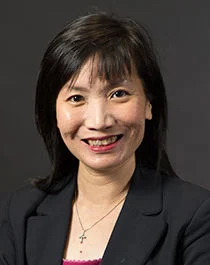
Academic Vice Chair, Research
Musculoskeletal Sciences Academic Clinical Programme;
Senior Consultant
Department of Orthopaedic Surgery
Singapore General Hospital
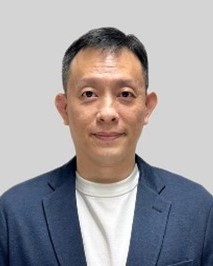
Senior Research Fellow I
Division of Musculoskeletal Sciences
Singapore General Hospital
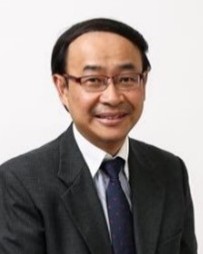
Senior Consultant
Department of Orthopaedic Surgery
Singapore General Hospital
What drives Biomechanics research?
A framework is proposed in which clinical questions and multi-modal patient inputs—such as surgical inquiries, imaging data (CT, MRI, X-ray), and clinical examinations— are integrated into advanced biomechanical research paradigms for knee and shoulder joints. This talk will highlight several biomechanical knee and shoulder projects performed by the PI and his team, each of which have deep clinical implications. Empirical benchtop testing (including cadaver, animal, and tissue characterization studies) is integrated with numerical simulation and modeling techniques (such as finite element analysis and multi-body dynamics). Ultimately, this synergy translates complex patient and experimental data into an advanced human biomechanical understanding aimed at optimizing clinical outcomes, including faster recovery times, enhanced mobility, optimized implant longevity, and increased patient satisfaction.

Computational Biomechanics has emerged as an important field that bridges the gap between biological complexity and engineering precision through advanced simulation and modeling techniques. By applying Finite Element Analysis (FEA) and Computational Fluid Dynamics (CFD), we are able to investigate the biomechanical behaviour of biological structures in-silico with the fastest pace and great accuracy.
The computational approaches have demonstrated remarkable utility across a wide range of real-world applications, including orthopaedic implant design, surgical planning, cardiovascular flow analysis and rehabilitation engineering. By providing detailed insights into stress-strain distribution, joint kinematics, haemodynamic and etc, computational models serve as powerful tools for improving clinical outcomes.
However, there are several limitations for the use of computation modelling in biomechanics. Challenges such as model validation, material property assumptions, computational cost and the difficulty of accurately replicating in vivo biological variability continue to constraint the reliability of simulation results.
This presentation explores both the promising capabilities and the existing challenges of computational biomechanics. Future directions aimed at enhancing model accuracy and integration of clinical practice to fully realize the potential of this approach will be elaborated.

Principal Research Engineer
Musculoskeletal Sciences ACP
SingHealth Duke-NUS
Finite element modelling (FEM) is a powerful computational tool widely used in orthopaedic biomechanics to investigate the mechanical behaviour of bones, implants, and surrounding tissues, supporting medical device development and surgical planning. This presentation provides a practical overview of the complete FEM workflow in orthopaedic research. It also discusses the strengths and limitations of FEM and highlights key considerations for developing reliable and clinically relevant orthopaedic models.

Senior Research Officer
Department of Orthopaedic Surgery
Singapore General Hospital
Motion analysis provides an objective way to measure and quantify movement, enabling clinicians and researchers to better understand movement impairments, identify compensatory strategies, and assess functional limitations. This presentation will provide an overview of motion analysis and its applications in the assessment of human movement. The use of movement data in research and clinical practice will be discussed, together with the capabilities and limitations of current motion analysis approaches. Future developments in the field will also be explored, highlighting their potential to enhance our understanding of human movement and support evidence-based decision-making.
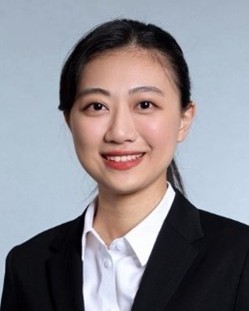
Medical Student
Duke-NUS Medical School
Three-dimensional motion capture provides detailed assessment of upper-limb kinematics; however, normative datasets remain limited and are predominantly derived from Western populations. Population-specific reference values are important for accurate clinical interpretation of shoulder movement and identification of abnormal movement patterns during rehabilitation and performance assessment. Our study establishes preliminary normative upper-limb kinematic data for healthy Asian adults and highlights internal rotation as a particularly sensitive indicator of functional shoulder adaptation. These findings provide a foundation for population-specific biomechanical reference databases that may support clinical assessment, rehabilitation planning, injury prevention, and future biomechanics research.
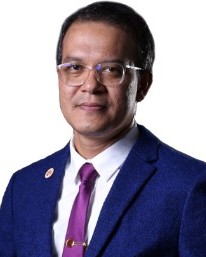
Director,
Medical Devices Technology Centre (MEDiTEC),
Institute of Human Centred Engineering (iHumEn),
Universiti Teknologi Malaysia (UTM)
This presentation explores a paradigm shift in implantology, transitioning from conventional, linear, and wasteful permanent implants toward a sustainable, “autonomic” healing system. We propose a closed-loop solution built upon three technological pillars: (1) Patient-Specific Design utilizing AI-powered, 3D-printed scaffolds for precise anatomical fit; (2) Bioresorbable Materials that degrade at a rate synchronized with natural bone regeneration, thereby eliminating the need for secondary removal surgeries; and (3) Integrated Sensing and Response, featuring a “built-in nervous system” of biodegradable sensors capable of real-time environment monitoring and autonomous, targeted therapeutic delivery. This multidisciplinary approach aims to achieve radical waste reduction while delivering superior clinical outcomes for musculoskeletal care.
A/Prof Denny Lie is a senior consultant in Singapore General Hospital Orthopaedic surgery, subspecialising in sports injuries, and arthroscopic treatment of shoulder, and knee conditions. He received his fellowship training both at Balgrist Hospital Zurich and Massachusetts General Hospital Boston.
He holds Adjunct Associate Professor posts at the Duke-NUS Graduate Medical School, NUS-YLL and LKC School of Medicine. He is the Program Director of the Singhealth Orthopaedic Residency and Director of the Biomechanics and Gait Labs, holds several biomechanics research grants and is research mentor to many students. He has authored more than 130 publications in peer-reviewed journals, delivered more than 300 lectures and conducted about 60 surgical courses locally, regionally and internationally.
A/Prof Denny Lie is currently the Chair of the ISAKOS Shoulder Committee, Scientific Chair of the APOA, past President of Singapore and ASEAN Orthopaedic Association, and past President of Asian Shoulder & Elbow Association. He is the Founding Chair of the Singapore Shoulder & Elbow Society.
Dr. WONG is currently heading the biomedical engineering research in Biomechanics Laboratory, SGH. His team actively works with engineers, clinicians, students and industrial partners from various departments and institutions, both local and overseas. His research interests are in fundamental and translational research but not limited to orthopaedic, ophthalmology, cardiology and etc. He has published over 60 international peer review journals and international conferences. He has been awarded as PI or Co-I of research grants from NMRC, SingHealth, NTU and SUTD totaling more than S$1 million. He also holds multiple patents in Singapore.
Pivatidevi Pareatumbee is a Principal Research Engineer at Singapore General Hospital with expertise in orthopaedic biomechanics. She obtained her Bachelor of Biomedical Engineering (B.Eng.) from the National University of Singapore (NUS). Her research encompasses both computational and experimental biomechanics, with particular interests in three-dimensional (3D) modelling, finite element analysis, and biomechanical testing for the design and evaluation of orthopaedic implants and surgical procedures. She is also a member of the Robot Enhanced Biomechanics & Engineering Laboratory, where she performs biomechanical testing using a six-degree-of-freedom (6-DOF) robotic testing system.
Josephine Lam Pei Wen is a Senior Research Officer with expertise in biomechanics, human movement analysis, and clinical research. She has obtained her Masters in Mechanical Engineering (MSc.) from Nanyang Technological University (NTU). Her work focuses on applying engineering principles and advanced motion analysis technologies to better understand human movement and improve healthcare outcomes. She has led studies involving gait assessment, upper limb movement, and wearable technologies, while collaborating closely with clinicians, engineers, and academic researchers to translate research into meaningful clinical applications.
Chia-Yu (Yvonne) Liu is a Doctor of Medicine candidate at Duke-NUS Medical School, Singapore. She received her Bachelor of Science in Molecular Genetics from the University of Rochester, USA. Her research focuses on musculoskeletal biomechanics, orthopaedic surgery, and clinical outcomes research. She is currently conducting motion-capture studies at Singapore General Hospital to establish normative upper-limb kinematic data for clinical assessment and rehabilitation. Her work has been presented at Duke-NUS Research Day, where she received the Outstanding Research Presentation Award. Beyond biomechanics, her research interests include medical education, sports medicine, and translational approaches that integrate movement science with patient care.
Dr. Ardiyansyah Syahrom is an Associate Professor of Mechanical Engineering and Director of the Medical Device Technology Centre (MEDiTEC) at Universiti Teknologi Malaysia. He specializes in biomedical engineering, biomechanics, biomaterials, medical device technology, and orthopedic implant design. With over 55 research grants, 14 granted patents, and more than 120 indexed publications, he is widely recognized for his contributions to bone biomechanics, biodegradable implants, tissue engineering, and personalized medical devices. An internationally invited keynote speaker and editor, Dr. Ardiyansyah actively collaborates with academic, clinical, and industry partners to develop innovative healthcare technologies that address global medical challenges.